
Interdisciplinary experiences are not just learning; they’re life
A reflection and call to action from Kyle Wagner


2025 saw the opening of a unique school - the Montessori Middle School in Hong Kong. Despite a busy year, school director Kyle Wagner found time to write this article for the Interdisciplinary Learning Network. It explains his rationale and the inspiration for what drives him as an educational leader. At the heart of it is the recognition that instead of following procedural methods - what Kyle calls the “school instruction manual” - there are better, richer, more meaningful ways to educate.
One Summer my parents decided they were going to build a cabin in the Decatur islands off the coast of Washington as a summer getaway. It was close to my mom’s relatives, and our family needed a place for my brothers and I to get away to during our teenage years.
My parents hardly knew a thing about homebuilding.
My mom had taken a ‘floorplanning’ class at the local community college; and my dad helped build our bunk beds and put a deep end in our pool, but they both didn’t know how to wire electricity in a home, or dig a sewage line.
They insisted that they would ‘learn.’
On July 15th, 1996, they loaded our Green Mini Van and made the long trek up the Pacific Coast with my four quadruplet brothers. We arrived on Decatur Island to a pile of lumber and a vacant lot. There was no instruction manual. No expert electrician or plumber to assist. Just lumber; and an extremely naive family of 6 with a lot of gumption, and very little know how.
In one month we undertook the project of our lives.
The School Instruction Manual
Building a cabin on Decatur island without an instructional manual is hardly the way we structure learning in school. Schools provide an instruction manual for every class. Which assignments to complete in the exact order they need to be completed. How to get a passing grade. How to spend every minute of your time.
And we wonder what happened to kids’ innate curiosity.
But what if learning experiences in schools looked different? What if like homebuilding in Decatur, classes, courses and schedules were built around big open- ended questions, and hands-on projects to guide learning? What if subjects merged together naturally to fulfil the goals of the project or to answer the big question?
That’s the exact approach we are taking at the inaugural Montessori Middle School at The International Montessori School of Hong Kong: A unique mixed age, bilingual program for 7th and 8th grade adolescent learners that uses interdisciplinary experiences to create empowered citizens.
And we just wrapped up our first big interdisciplinary unit on Identity; and addressed our first big question:
What makes me, ‘me?’ An Interdisciplinary Approach to Uncovering Our Unique Identities
In Science, students constructed DNA models to represent the influence of genetics on their personal preferences.
To build their models, students had to learn:
The structure of DNA: The double helix, sugar-phosphate backbones, and nitrogenous base pairs (Adenine-Thymine, Cytosine-Guanine).
Genotype vs. Phenotype: How to distinguish between the genetic code (genotype) and the physical traits or behaviors it produces (phenotype).
Inherited vs. Acquired Traits: Recognizing that while eye color is genetic, a preference for a specific sports team is likely environmental/learned.
Probability: Simple Punnett Squares to understand why they might share traits with siblings but still be unique.
In Language, they wrote poetry and narratives around what made them unique.
To construct the poetry and narratives, they had to learn:
Figurative Language: Using metaphors, similes, and personification to describe internal feelings or unique personality quirks.
Narrative Voice: Understanding first-person point of view and how to establish a consistent “tone” that reflects their personality.
The Writing Process: Planning, drafting, and—most importantly—revision to ensure their unique “voice” comes through clearly.
Structure: Understanding how different poem forms (like I Am poems, Free Verse, or Sonnets) can change the impact of their message.
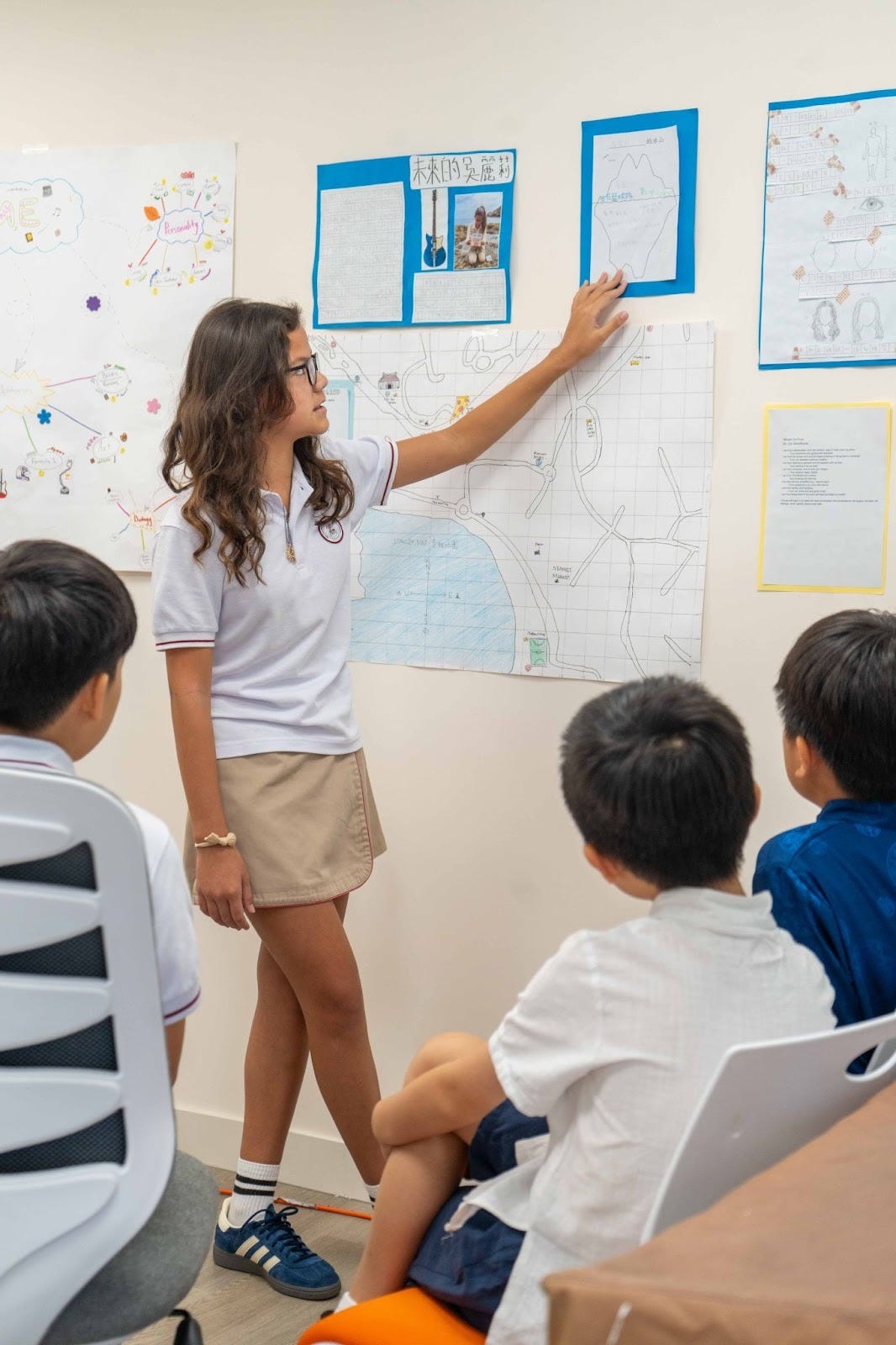
In Humanities, they created interactive maps to represent the cultures in the places they call ‘home.’ To build the maps, they had to learn:
Cartographic Conventions: Using legends/keys, scale, compass roses, and coordinates.
Human-Environment Interaction: How the physical geography of their “home” (climate, terrain) influences the culture (food, clothing, traditions).
Cultural Diffusion: Understanding how cultures move and change when people migrate from one place to another.
Digital Literacy: If the maps are digital, they need to know how to embed “hotspots,” links, or media to make them interactive.
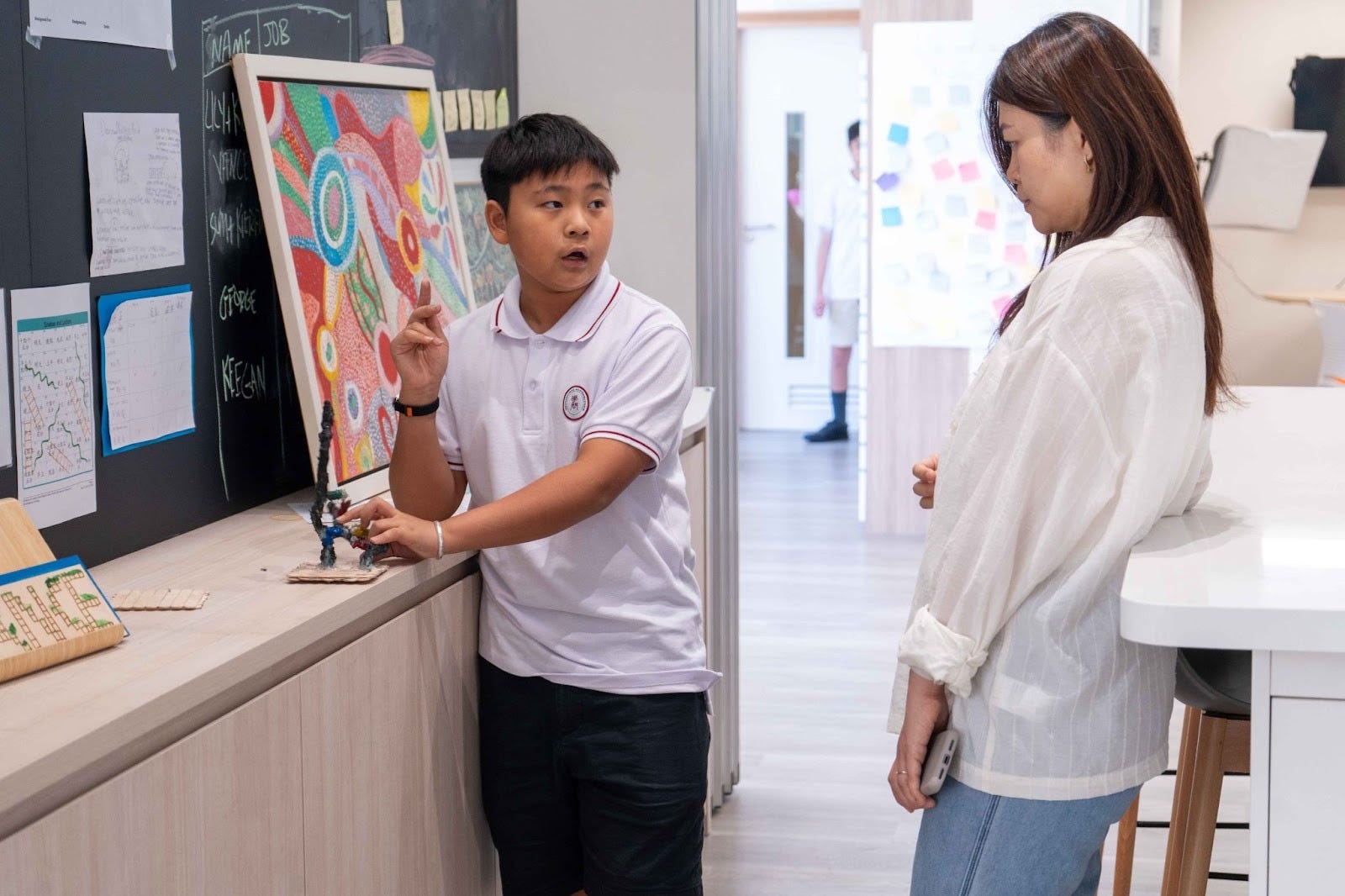
In Design Tech, students created 3-D designs and accompanying stories of their names. To create these designs, they had to learn:
3-D Modeling Software: Basic proficiency in tools like Tinkercad or SketchUp (e.g., grouping shapes, “hole” functions, and scaling).
Design Thinking: Empathizing with their own history to define a “problem” (how do I represent the name ‘Alex’?) and prototyping solutions.
Symbolism in Design: Choosing colors, textures, and geometric vs. organic shapes to convey meaning (e.g., sharp edges for strength, soft curves for kindness).
Measurement and Precision: Using the metric system to ensure 3-D prints or physical builds are accurate and stable.
And after 6 weeks, in the same way my family and I stood proudly by the frame of our new cabin, students stood proudly by the unique blueprint of their identity (see picture). Learning was innate and natural.
The Benefits of Interdisciplinary Learning
Interdisciplinary experiences aren’t just fun for students.
They also create the kind of empowered citizens our world needs.
According to a number of studies1, they:
Enhance critical thinking and synthesis
Build real-world problem solving skills
Increase creativity and innovation
Improve cognitive flexibility
A Call To Action: Shifting Our Classrooms to Allow for These Experiences
Designing and Delivering Interdisciplinary Learning Experiences is not easy. It requires bold leadership, courageous teachers, willing students and a shift in the way we have done school for a long time. But our students deserve it.
So what shifts do we need to make for this kind of interdisciplinary learning to grow roots?
First, we need to shift our role in the classroom. There’s no need for content experts to stand in the front of the classroom and disseminate knowledge. AI, Youtube Videos, and the world’s largest content library can do that for us. Instead, we need to become learning designers who can help guide the learning experience, and deliver short mini-lessons when the time calls. This requires getting to know our students’ unique interests, personalities, and strengths and reorganizing learning pathways to tailor to them.
Second, we need to shift our environments to allow for flexibility, and resources that allow for exploration. There’s no longer a need for rows of chairs facing a giant whiteboard. Instead we need modular setups that cater to diverse learning styles, and allow for multiple kinds of learning to happen simultaneously. Think small couches, coffee tables, breakout rooms, and yes, even a kitchen. Open cabinets with hands-on experiments, learning materials, maps, timelines, books, technology.
Finally, we need to plan teaching and learning in teams rather than in silos. This can be with the teacher next door, or a group of teachers across the school. Language and Social Studies can merge around bigger topics or themes like Storytelling or Identity. Science and Math around sustainability.
Making these shifts isn’t just ‘preparing kids for the future.’ It’s training them to think with the dispositions needed right now. If Maria Montessori, John Dewey and Piaget reshaped schooling in this way 100 years ago, we can certainly achieve it today.
I speak from 22 years of experience educating this way. It absolutely works. It requires imagination, and even more practice.
What’s one shift you can make in your classroom right away?
We can’t afford to waste any more time - our students’ futures depend on it.
Kyle Wagner Bio
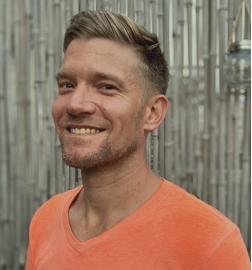
Kyle Wagner doesn’t just build interdisciplinary learning experiences; he builds future citizens. As the Founder of Transform Educational Consulting Limited and the Inaugural Middle School Director at The International Montessori of Hong Kong, Kyle specializes in turning passive classrooms into active hubs of innovation. Kyle first fell in love with project-based learning as a Middle School Humanities teacher at High Tech High (the most prominent project-based learning school in the world) where he supported students in publishing best- selling books, curating their own living museums, creating social enterprises, and even influencing policy change in the community through real- world projects.
He has taken this passion global, building interdisciplinary micro-schools like ‘Futures Academy’ at The International School of Beijing, and supporting thousands of educators from schools around the world through training and workshops to transform their classrooms from passive spaces into active hubs of innovation as well.
A published author, Kyle’s books ‘Where Is The Teacher:’ The 12 Shifts for Student-Centered Environments, “ and “The Power of SIMPLE,” and his podcast, ‘The Student-Centered Shift,’ share simple ideas and strategies to make these shifts through real case studies from the classroom.
Kyle holds a M.Ed. in Teacher Leadership with a thesis that focuses on developing democratic classrooms and distributed leadership models. When not writing or teaching, he is performing with his original band, participating in karaoke contests and traveling the world with his partner. He currently resides in Hong Kong where he spends time developing student-centered schools of the future while helping other school leaders build theirs.
Brassler, M., & Dettmers, J. (2017). How to Enhance Interdisciplinary Competence—Interdisciplinary Problem-Based Learning versus Interdisciplinary Project-Based Learning. Interdisciplinary Journal of Problem-Based Learning, 11(2).
Ivanitskaya, L., Clark, D., Montgomery, G., & Primeau, R. (2002). Interdisciplinary Learning: Process and Outcomes. Innovative Higher Education, 27(2), 95–111.
National Academy of Sciences, National Academy of Engineering, and Institute of Medicine. (2005). Facilitating Interdisciplinary Research. Washington, DC: The National Academies Press.
Repko, A. F., & Szostak, R. (2020). Interdisciplinary Research: Process and Theory (4th ed.). SAGE Publications, Inc.
 | A guest post by
|