
A new interdisciplinary pathway
in the International Baccalaureate Diploma Programme

Robin Julian presented at the recent interdisciplinary learning conference at Edinburgh University, on the new interdisciplinary pathway for the International Baccalaureate (IB) Diploma Programme extended essay. In this article for the IDL Network, he sets that presentation in context and provides links to further literature.
The International Baccalaureate Organisation, a global leader in international education, has offered, via authorised IB World Schools, its Diploma Programme (DP) to pre-university school students across the globe for over 50 years. Emphasising breadth and depth of learning, DP students take subjects from six subject groups (language and literature; language acquisition, individuals and societies, sciences, mathematics, and the arts) in combination with a mandatory ‘core’, consisting of Theory of Knowledge, the Extended Essay, and Creativity, Activity, Service (CAS). Learning in the DP is inquiry driven, student centred, and based on conceptual understanding.
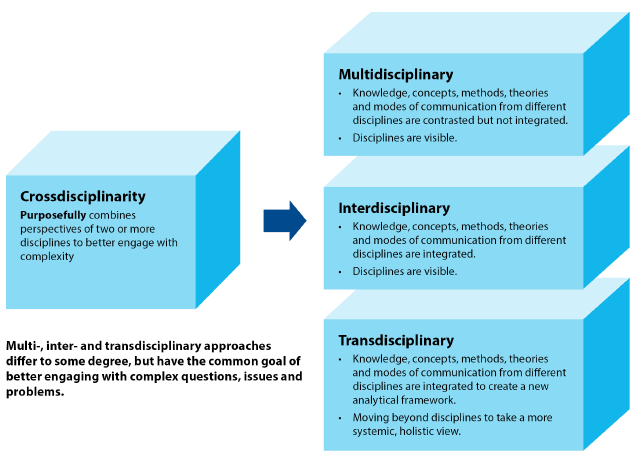
Cross-disciplinary approaches to learning are embedded in the DNA of the IB, for example, the transdisciplinary themes of the Primary Years Programme (PYP), the interdisciplinary unit of the Middle Years Programme (MYP), and the interdisciplinary pathway of the DP’s academic research paper, the “extended essay”. The DP also features specific courses that integrate disciplines, and it is in this space that we find a new cross-disciplinary innovation, Language and Culture.
In their article published by the Royal Anthropological Institute1, Gabriela Grinfeld and Robin Julian consider the design and piloting of the Language and Culture course in the context of the IB’s cross-disciplinary learning and teaching framework, exploring the integration of studies in language and literature with social and cultural anthropology. As anthropologists, and incorporating their experiences in curriculum design and management, they provide an overview of the development of the new Language and Culture curriculum, highlighting its purposes and challenges, and discussing the value of adopting an interdisciplinary approach as a way to broaden access to anthropology at a school level. They draw from their involvement in the creation of this new pedagogic initiative and from the analysis of testimonies gathered from alumni focus groups.
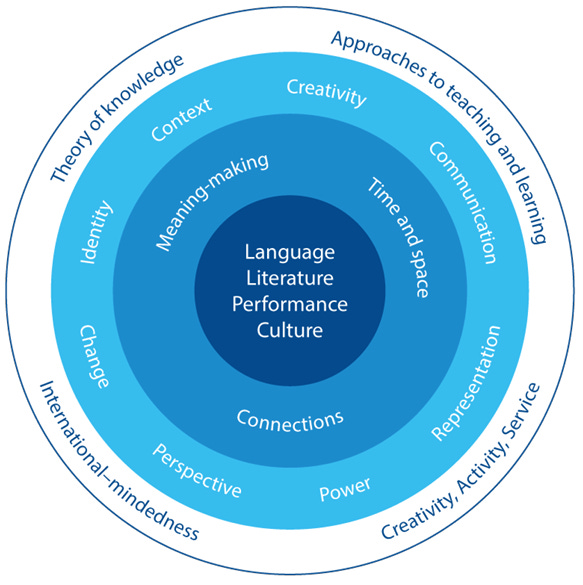
Language and Culture is a cross-disciplinary subject linking language and literature with social and cultural anthropology. It is built on the notion of conceptual learning in which students engage with central concepts of studies both in language and literature and in individuals and societies. In language and culture, students engage with a variety of different text-types in order to explore key notions related to language and culture through them and become flexible, critical readers. The model above portrays the main areas of study of the course, the central concepts in it and the way it relates to the principles at the core of the DP.
Robin Julian is a Curriculum Manager at the International Baccalaureate Organisation and is based in The Hague.
Grinfeld, Gabriela, and Robin Julian. ““Language and Culture”: Strengthening Access to School Level Anthropology through a Cross-Disciplinary Approach to Curriculum Design.” Teaching Anthropology 14, no. 2 (November 2025): 12–27. https://doi.org/10.22582/ta.v14i2.790.
 | A guest post by
|